Wednesday, July 30, 2008

HTG Thoughts

I first met Arlin Sorensen at the second-ever SMB Nation conference.

He was doing a presentation on leadership. E-Myth, goal-setting. All that good stuff.

At the time I remember being very impressed with his operation and his attitudes.

Then he started a series of mastermind groups call HTG (Heartland Technology Groups). See Arlin's Blog.

And he asked me to join. And other people asked me to join. Many people just assumed I was a member.

Anyway, Arlin and I have done business over the years. He was the second-ever SBSer of the Year. I was the third. (Bob Hood was the first.)

Arlin and I have appeared together "on stage" several times. We've sold books together. We include each other in various activities and see each other in three or four different cities a year.

But I was not an HTG member.

HTG requires commitment. Commitment to building my business. Commitment to other people in the group. Commitment of time. And a bit of money (a few hundred bucks).

My businesses have grown dramatically over the last few years. I couldn't see myself committing to a program that was likely to make the growth even faster. I've seen more than one business burn out and crash from rapid growth.

Anyway, we finally put in a slow-growth plan.

And I applied to HTG and was accepted.

Our group -- HTG 13 -- met for the first time this week.

My fears were correct. This is going to result in more growth, more direction, more focus. Accountability from someone besides myself.

- - - - -

Focus

Everyone has a different approach to getting through the day, the week, the month, the year, and life generally.

Some people lose themselves and their values in search of the almighty dollar. Not Arlin.

Arlin -- and HTG -- puts emphasis on having a plan and executing it. Life plan. Leadership plan. Business plan. Execution. Execution. Execution.

But underlying all of this is a real commitment to community. Arlin builds communities. The HTG members build and live in communities. They participate in communities. They contribute to communities.

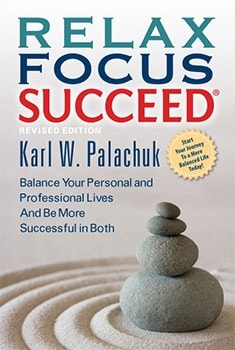
For me, there's a lot of consistency here. My Relax Focus Succeed(R) work relies very heavily on planning and goal-setting. And, obviously, I'm addicted to the community. In addition to making friends, I enjoy helping people. And, at the end of the day, it all comes back.

My biggest challenge is focus. That's why I emphasize it so much in the book.

Planning is good. And execution is good. Both of these things are visible events you can show to other people.

But somewhere between them comes focus. Here's what I believe:

You will have success in whatever you put your focus on.

Having a business plan is great. But if it sits on a shelf in a binder, and you can't even remember one goal for the year, then it's useless. Focus means you need to put your attention on that thing. Focus means you need to say no to activities that drag you away from your plan.

You need to say no to business opportunities that make a little money now, so you can focus your attention on the big plan that will make more money in the long run.

You need to focus on building friendships and not just business relationships. When all the money's gone (or you're so wealthy that it's irrelevant), friends will be the most valuable thing you have. After all, when you have a bad day, you don't email the bank. You email a friend.

So as I take home my assignments and begin the HTG journey, my personal challenge will be focus. I need to give this new community the attention it deserves.

I'm looking forward to it.

Saturday, July 26, 2008

Vendor Loyalty Goes Both Ways

If you're like us, you have a standard set of products and services you offer. This is your "line card" of products.

Our standard products look something like this:

- HP hardware (servers, workstations)
- Microsoft O.S. (SBS, Server 2008, Vista)
- Symantec Backup Exec
- Trend Anti-Virus
- Diskeeper defrag
- Windows Defender
- Microsoft Office
- QuickBooks

We have a longer list of products as we move to network, wan, printers, etc. And if the client is already using something, and they're happy with it, we support that (Peach Tree, Goldmine, etc.).

In the big picture, we keep costs down and maintenance quality support by having a standard line card for our business.

But business is business. We are not wedded to any of these products "til death do us part." True, we're pretty heavily invested in some. I can see a world without Microsoft operating systems, but I don't plan to go there. Quoting something other than HP would require a good explanation to our clients, but we'd all get over it. If we switched to WordPerfect instead of MS office, no one would know the difference.

Vendors are lucky that inertia is such a powerful force. We are more likely to keep doing the same thing than we are to make changes.

I believe loyalty is one of the fundamental human traits. We find ourselves becoming loyal simply because we continue to do business with someone. We have favorite vendors, favorite distributors, and favorite products.

Are these always the best? No. They are simply our habits evolving into loyalty.

From time to time, you need to splash some cold water on your face and look at what's really going on with your vendors.

I revealed my score card for Microsoft a few days ago. We have similar analyses for other vendors (although far less detailed because we are less intertwined with them).

In choosing vendors, one of the most important criteria is quality. That is why we sell HP and Diskeeper.

But, for many products, there's a "bar" above which a product must be. And if several products are above the bar, then we have more choices -- and less loyalty. A great example here is small office switches. 3com, Linksys, D-Link. If I'm managing the traffic for 20 people and they're all within 100 feet of the equipment room, pretty much anything will do.

Now, if I have 500 people spread out across three floors, I'm not going to build a network based on a series of $80 switches.

But for that 20-person network, there are many choices.

Anti-Virus is another commodity where there's a bar. Luckily, today, every major brand is above the bar. McAfee, Symantec, Trend. All of them can be centrally managed, centrally deployed, and do a great job of stopping the bad guys.

So when we make vendor choices in such an environment, other factors become more important.

One of the key factors is vendor loyalty -- to us.

Does the vendor provide service, support, training, NFRs, spiffs, and loyalty? Are they committed to the channel, or will they compete directly with me?

About a year ago we reviewed all the major products on our line card. At that time we decided to move away from Symantec for three primary reasons.

1) Their products have become nearly impossible to make a profit on. Un-installation takes an act of Congress. Upgrades require complete removal of the old product. So the whole operation is labor intensive. And hard to justify.

2) They have resisted meaningful NFR programs and free training forever. True, they recently came around on this. But a day late. And we have no sense that they're committed to continuing vendor-friendly programs.

3) They consistently -- and aggressively -- try to sell our clients when it's time for renewals.

#3's the killer.

If you compete with me for my clients, why should I give you my money?

Why should we be loyal to a vendor who is not loyal to us?

Habit?

Not a good excuse.

Symantec recently made clear that they will officially have zero loyalty to the channel. See http://go.techtarget.com/r/4068188/1455460.

If you are "in the middle," you're not currently under attack. But the largest 900 accounts will be handed over to inside sales reps.

And all license renewals for small and medium-sized businesses will be moved from channel partners to Symantec's direct sales team.

We dodged a bullet. We're officially a Trend house at this point. As renewals flush through the system, we just move them over to a competitive upgrade from Trend.

- - - - -

Whether it's Symantec, Microsoft, HP, or anyone else . . . Vendors will do whatever they want. If we add $100,000 in sales for any of these products, we're still just about the smallest fish they ever deal with. They're not going to chase us to determine what their future strategy looks like.

But there are companies with a fundamental commitment to the channel. They may not be loyal to my little consulting firm, but they're committed to using the channel to maintain price, market share, and partner loyalty.

In the consumer market, you can appeal to "the masses" with a little flash and good sales price.

But in the business world, clients rely very heavily on the advice of their consultants -- internal and external. If the consultant recommends Cisco, they buy Cisco. If the consultant recommends Trend, they buy Trend.

If I started quoting WordPerfect on Monday, my clients would start buying it.

Vendors are always tempted to go with direct sales because of the higher margin. We need to get used to the fact that some direct sales will be part of most vendor strategies from now on. This is particularly true of products that are sold to both the business and consumer markets.

But, in the big picture, there are vendors loyal to the channel and vendors who are not loyal to the channel.

Dell has demonstrated twice that they are not loyal to the channel. Their third attempt may be different.

Symantec has moved away from the channel. If everyone starts selling something else, they may be back.

Microsoft is moving away from the channel. As a stock holder, I am very disappointed in this. As a reseller I am disappointed in this.

- - - - -

Emotions need to be set aside here. This is business. You need to make business decisions about the long term business strategy you'll pursue, and who your business partners are.

Vendors will do what they will do. You need to do what you need to do.

Be loyal to vendors who are loyal to the channel.

When you need to change products, make the move and be done with it.

The world keeps spinning.

Thursday, July 24, 2008

Grading the Microsoft Relationship

If you look back at my posts for 2008, you'll see there's quite a bit on vendor relationships. The biggest vendor relationship we have is with Microsoft.

And it's a complicated one.

Recently, I looked at one recent development from MS. See

- Microsoft's Emergency Room Reform Policy
- Dear Microsoft: What Does Partner Relationship Mean To You?
- Microsoft Sticks to Call-Back Only

I tried to look beyond immediate issue and onto the relationship. Here's the deal: Vendors are fickle and will do whatever they decide at any given time. Sometimes that's good for you; sometimes that's bad for you. This includes Microsoft.

If you build a great business, you are impervious to anything that your vendors or competitors do.

The Microsoft relationship is very complex. There are great programs (such as SBSC), but no program is perfect. There are other programs that have problems, the vendors know what they are, and can't seem to make progress in getting them fixed.

Your Microsoft relationship doesn't have to be (and can't be) all or nothing.

Microsoft is different from other vendors because their company touches our company in many more places.

With 90% of our vendors, there's very little touch at all. There might be some co-marketing campaigns. Training. Buying/Selling. Spiff. NFR. Done.

Microsoft: Holy Smokes! Here are my proposed grades for Microsoft. Your mileage may vary.

(in some kind of alpha order)


  • Blogging. Outbound. Grade = A. Generally great, based on number of blogs and overall content.

  • Blogging. Inbound. Microsoft does a good job of tracking the blogosphere and responding to it. When there's a buzz, Buzzmetrics picks up on it. Whether the response is appropriate is another animal. Overall Grade = B.

  • Certification. Used to be Solid A. But now there are so many programs and chopped up, overlapping specialities. 98% of clients have never cared. Now even certified Pros don't care. Confusing. Unfocused. Not clear why we need to continue pursuing all these. There needs to be a certification program. It needs not be what we have now. Current Grade = C.

  • Certified Partner. Comes and goes. Greatly devalued by the "registered" partner program. Decimated by the SBSC program. Grade = C. Due to the fact that MSDN and TechNet are included, I could be talked into a B. But those are "gimme's" and not what the program is supposedly focused on.
    • Gold Certified Partner. Keep walking. Nothing to see here. No grade.


  • Channel Friendly Vendor. Microsoft has had a growing direct-to-user segment. It started in the home and is spreading to the business world. Traditionally, I'd say MS gets an A-/B+ on Channel Friendliness. But the Software-plus-Service program and the Office Live program are a clear Grade F in terms of Channel Friendliness. I'm reminded of the best line in The Maltese Falcon: "When you're slapped, you'll take it and like it." Overall grade is now a B. If things go as Microsoft plans, grade will be C next year and D the year after.

  • Licensing: For the most part, licensing isn't that difficult. Right now Microsoft needs to figure out rational licensing for virtual machines. OVS is great. Needs a bit of fine-tuning, but it is the future. Desktop O.S. needs to allow new machines. Office needs to be much cheaper. Overall, it's a good program. Microsoft needs to do better evangelizing about the fact that it's not that difficult to understand. Other than that, Grade = A.

  • License sales tracking. Microsoft is essentially incapable of tracking who sold which licenses. Rather than keying this information to a unique identifier like Partner ID (think relational database), they tie it to your company name. For example:
    kP Enterprises
    KP Enterprises
    KPENTERPRI Biz CON IINc
    KPENTERPRISES
    KP Enterprises Business Consutling

    and so forth. There are a million ways to get this wrong. There are also 100,000 partners who have never received credit for the licenses they've sold.

    Having said that, people who focus on licenses as their main or only business eventually get this fixed. For them it's probably an A.

    For most partner, Grade = F.

  • Marketing. Complicated.
    • Marketing materials are normally over-produced and off track. But they are spectacular fodder for building your own stuff. Overall Grade is A, based on quantity and quality.

    • Same with powerpoint slides.

    • Connections / Microsoft Across America. Great idea. Unfortunately, the Connections events are not separated from TS2 and MSDN events. As a result, Microsoft has completely lost the ability to get decision-making end-users into the room. Connections: grade for usefulness to partners = D. Used to be A.

      As for "the Bus" / Microsoft Across America, this is a phenomenal resource that falls into the category of "You get out of it what you put into it." If you have a plan, and you work the plan, this is a very impressive benefit to partnership. If you use it properly, Grade = A.

    • Go-to-Market campaigns. Amazing. I wish we had the bandwidth to do more of these. Truly great programs. Well designed and well executed. Combine education, sales component, marketing, an offer, and a reward. Need a lesson in marketing? Do this! Grade = A.


  • MSDN. Great, amazing program. Worth every penny -- no matter what level you buy in at. Certified Partners: If you just throw these DVDs on the shelf, you are throwing away money. STOP IT. Use this amazing resource now. Grade = A+.

  • MVP Program. This is an interesting one. The first MVP I ever met told me how he "flips" NFR copies of software for his clients. The second one I met was getting free books from Microsoft for his user group and selling them to the general public. Since then I've met dozens of MVPs who are approximately the greatest group of partners one could ask for. I'd list names, but you've heard them all and I'd miss someone. Overall, this program seems like an A, but there are a few lay-abouts who just need to go. I'll say grade = A.

  • OEM / System Builder. We still belong because of the odd machine we end up putting together. But, to be honest, we don't "build" machines except to buy HP equipment and load it up with the occasional OEM system. This is a good program, but for the small system builder, it would be nice if Microsoft offered a desktop operating system via Licensing. The OEM Office program is nice, but rationally priced Licensing could make that irrelevant as well. For the small VAR: Grade = A, but I wish the whole program were replaced by a better licensing program.

  • PAL - I am embarrassed to say, I don't know what these letters stand for. But I know what a PAL is: The PAL program recognizes and thanks outstanding SBSC partners for their work in the community and their willingness to help other partners. I'm not sure why these people aren't all MVPs except that there are too many community minded people in the SMB space, so you can't flood the MVP program. Anyway, we haven't seen much after the announcement, but I expect great things from this program and these people. The list of PALs is amazing and spectacular. A truly great group of people. Grade for now is A. Let's see what develops.

  • PAM - Partner Account Managers. Some are good; some are great. A handful are so-so. The program as a whole keeps shifting. For non-Gold partners the PAM and T-PAM and C-PAM (tele-PAM and Community PAM) programs are good at filtering out a few things you can focus on for success. They are not your hand-holding guide to personal success. As long as you keep that in perspective, the grade is A or A-, depending on your PAM.

  • "Partner" program overall. This one is difficult. Where you stand depends on where you sit.

    If you're at the bottom of Vlad's Food Chain, the Partner program is 100% spectacular. You get amazing resources for almost nothing. No effort, a tiny bit of money, no skill, no experience, no relationship, no commitment, etc.

    If you get yourself certified and join the SBSC, you also get an even more amazing amount of return. Again, without putting out an amazing amount in money or effort.

    When you really make a commitment, shell out the big money, jump through the hoops, make the sales, hire the people, get the training, and join the Certified Partner program, the balance tilts. You can look at the SBSC program and legitimately ask what you're getting for your money.

    As for Gold? You're told that you're the most important company on earth. That encouragement, a couple of extra internal use licenses, and the gold lapel pin consist of your entire "benefit" for being Gold Certified. I see people spelling out the benefits, but I haven't talked to a single Gold Partner in the last three years who doesn't think the Certified, Registered, and SBSC programs are devaluing the Gold Program.

    I know Microsoft is trying to figure out how to restructure this. The current program is probably graded as follows: Registered = A+ / SBSC = A / Certified = B / Gold = B-.

  • Partner Program Research Panel. I've only been in this a year. Not sure where this info goes. I guess Grade = A. It's interesting to speculate about what is being planned based on the questions being asked.

  • People. Overall, the most valuable asset at Microsoft is their people. With very few exceptions, I find Microsoft employees to be honest, hard working, dedicated, committed, friendly, smart, talented, and helpful. Sounds like gushing, I know. But think about the people you've met. I can name exactly four people I've dealt with in the last thirteen years who are jerks, losers, morons, or just plain a-holes. One of these disappeared very quickly after a bizarre public display of arrogance and stupidity. Very unusual.

    But the other 1,000 Microsoft employees I've worked with are spectacular. I've met people at almost all levels of the organization, in countries all over the globe. They're all nice, talented people. This does not happen by accident. You get honesty, dedication, motivation, and all the rest because of a great hiring process, proper motivation, and a culture of excellence. I have friends at Microsoft who are some of the nicest people I've ever met.

    One of the criteria our company has for clients is that we only work with nice people. So it's good to have this with vendors as well. Solid A+.

  • Products. They push products. What can you say? They have the occasional "Bob" or "Me" product. Some products have no real use in the real world and simply fade away. But that's what you need to do in order to build the best, most consistently high quality software on earth. Solid A+.

  • Product Delivery. I believe Microsoft's move to delivering their products online is the beginning of the end of their dominance on the desktop. They have fallen into their competition's trap. As for Channel distribution and licensing, see Channel and Licensing grades. As for direct-to-my-client distribution, I'm giving them an Grade F. First, they're not doing a good job with it. Second, they shouldn't be doing it. And, third, from the perspective of a partner, this program is not in my best interest.

  • Product Pricing. As a purchaser of Microsoft products, I consider SBS underpriced (sbs2008 is more in line), Server is priced right, Windows desktop is overpriced, and office is hugely overpriced. Overall, I'd say Grade = B+. Most products are pretty well priced.

  • SBSC is spectacular. Grade A three years in a row. I could go into detail, but it's A for this, A for that, A for the other thing, etc.

  • SBSC advisory panel. Great feedback mechanism. Needs to meet more frequently. Presenters need to either follow up or don't offer to follow up. Grade A-.

  • Support is complicated.
    • Online and DVD support includes MSDN (see separate grade), TechNet (see separate grade), Knowledge Base, blogging (see separate grade), and general "help" files. Overall, Microsoft has the most thoroughly documented, thoroughly supported software that has ever existed. In addition to the Microsoft official support sites, there are thousands (tens of thousands) of unofficial sites that support this stuff. Plus the PAL and MVP programs. and more. Grade A+.

    • Phone support. Oops. I mean, "Enter your problem online and wait for us to call you" support. No grade at this time. We'll have to see how it works out. My guess is: Great for people who do hosting; great for people who support large enterprises; disaster for small businesses and the technicians who support them.

    • Phone support / PSS through July 2008. This one's got three components. First, everyone knows that the US-based support for each product is amazing and spectacular. A+ by all accounts.

      Second, getting to that support has been spotty at best. We stopped using the horrible first-line support for SBS because the people we talked to were untrained, unprofessional, unwilling to take direction, and it cost us more money that it will ever be worth to have them "help" us. A support structure built around "partners" figure out a way to get escalated ASAP is a total failure. Solid F. F for effort. F for performance. F for not caring about partners.

      Third, there's the issue of privacy. The person in charge of this program is not aware of the privacy policies he is supposed to be enforcing. If he doesn't even know what they are, or where to find them, then he can't be doing much to enforce them. We had a completely unacceptable breach of privacy. It was not met with any concern remotely related to privacy. 100% of the concern was over avoiding a lawsuit. Failure at it's worst. F for effort. F for not enforcing policies. F for not caring about the partner or the relationship.

      So, even though the top-level support is A+, the fact that you have zero expectation of privacy and you have to go through seven rings of hell to get to a competent technician, PSS gets a big fat F.

      We'll see if the Don't Call Us, We'll Call You support is an improvement.


  • TechNet. Perhaps my favorite resource. I'm very sad that I can't beat my technicians over the head and make them use the CDs instead of the online piece of crap search engine. If you use the CDs/DVDs, this resource is spectacular and amazing. If you use the online search tool, you will grow old and die (or go to www.Google.com/Microsoft). In either case, you won't get the rich, useful, amazing resources available on the DVDs. DVD version: Grade = A+. Online version: Drop the class and move to Google before you get an D for the semester.

  • Training. Free training, and the $100 and $200 training offerings have always been spectacular. Amazing track record. In 12 years I've never attended a Microsoft training that was less than Great. Solid A for in-class training. Solid A for Partner University. Solid A for self-paced training. Solid A for books.

    The week-long training-center training is very good, but not quite so spectacular. I know why it's priced as it's priced. And I know why it's run as it's run. But overall, I have to give it a B+ for value.

  • TS2. There's a lot more to TS2 than the shows at the movie theater or the hotel. Overall, this program is great because it is extremely well focused. Training for techies about the stuff techies need to know. NOT delivered by hired gun/drones, but by techies! Delivered by people who love to show you their new phone, or their 16GB Micro SD chip. Techno-heaven for Techies. Pure and simple. Grade A all the way.

  • Vendor overall. This grade is based 90% on the basic functions of providing good products, getting through them the channel, and getting them installed. Solid A.

    But life's not that simple, is it?


Side note: And Microsoft has a lot to teach us about focusing on the almighty dollar. They do all this in a never-ending effort to make more money. And they do.

-----

Believe it or not, I may have missed something.

How do you grade Microsoft?

Hooking that iPhone 2.0 to SBS?

Tim Carney dropped me a line the other day with some great tips on getting that new iPhone connected to the SBS Server.

    In the wake of iPhone 2.0, many executives are wanting their iPhones connected to their Exchange Servers. You may have previously enabled IMAP, but we all know Exchange-ActiveSync is the right way to go (plus this enables Windows Mobile devices without the need for a Good Server). In order to support Windows Mobile devices (and the iPhone version 2) on a Microsoft Small Business Server 2003 running Exchange 2003, several things need to be done. The following instructions I generated after spending too much time researching this issue and I hope you find them as useful as I do. The standard legal stuff applies, these directions are provided without warranty, follow at your own peril.


So, I says, "What can I find this outside of my personal mailbox?"

And he says http://sbs-mobility.blogspot.com/.

Love Tim. He says he's willing to give phone support to anyone hooking up the MacPhone. But I decided not to publish his cell phone here. You'll have to contact him through his blog.

He also recommended Susan's blog (of course) and Eriq Neale's post on Exchange and iPhone:

Eric Neale's Blog on configuring iPhone v2 for Exchange

And, what mobility discussion would be complete without Mr. Happy Fun Boy, Chris Rue's FunCave?

The message should be clear by now: Don't call me! Ask one of these folks.

Erin in our office has ordered the 16GB iPhone 2.0. When it arrives, Josh (who hates non-Microsoft phones) will have to configure it. Life ain't fair.

Tuesday, July 22, 2008

Dave Sobel's Amazing Referral Program

Have you met Dave Sobel? I first wrote about him over at I5PC.com.

Dave "is" EvolveTech in the Virginia/DC area.

Dave is smart, witty, fun, a good gambler, and a good drinker.

And a good businessman, and a good technician.

One of the most profitable hours of my life is when I pinned Dave down in Anaheim and made him tell me all of his secrets. Dave has won some very-deserved attention from Microsoft for his marketing ideas.

And then I caught up with Dave in Vegas, trying to get to a blackjack table. So while the casino plied him with liquor, I got more information about how he does things.

Oh. Did I mention that Dave is the new co-host of the SBS Show with Vlad Mazek? Let's be honest, Susanne Dansey is better looking -- but it's radio, so Dave does fine.

Last public siting: Dave was the moderator for a panel of "superstars" at the ICCA conference in June. Seems like a year ago, but it was just over a month ago.

Last private siting: Dave coordinated a private van tour of the monuments at night because all the full-size buses were full. (Thanks, Dave. It was 99 degrees with 99% humidity. But we had an air conditioned van.)

Bottom Line:

Dave Sobel is a heckuva nice guy. Great businessman. etc.

If you get the chance to spend time with Dave, do it.

- - - - -

So, what's new with Dave?

Three things.

Thing One: Virtualization.

Even before Microsoft released Hyper-V, Dave started a series of blog post on Virtualization. The basics. Getting Started. Practical considerations.

The future is here. and if you want to learn the details from someone who uses this technology every day, read Dave's blog. Free, of course: Check Out Dave's Blog.

{ Side Note. Dave: What's up with the blog? For $20/month I can hook you up with a nice service where you type domain/blog and you're connected. Anyway . . . }

If you need a quick update on "everything virtual" then read this blog!


Thing Two: Referrals

Dave has the coolest, gutsiest, smartest referral program I've ever seen. We're in the process of implementing this in our own business. Dave's referral program is geared specifically to recurring revenue and managed services. Here's the cool thing: Why hire a sales person when you can turn your clients into a sales staff?

Dave has just released a white paper on his referral program. Available exclusively at SMBBooks.com.

Here's a tickle: Consider giving a "referral fee" equivalent to a month's managed services!!! It's bold. But cheaper than a sales person. There's no workers' comp. And you don't have to buy a new desk.

Find all the really great details by reading Dave's white paper.


Thing Three: Virtualization Seminar

Dave and I are putting on a seminar on September 4th, 2008 in Chicago. We are working with Amy and the good folks over at MSPSN and the MSP Revolution Conference. The seminar is totally FREE, but you gotta register.

The topic is:

Designing, Implementing, and Making Money with Virtual Environments
Come learn from two partners who run their own businesses with virtual environments and have each sold hundreds of thousands of dollars worth of virtual systems. You'll learn:

- The basics (hardware, software, the virtual environment)
- Designing a virtual environment
- Tools you'll need
- Right-sizing the hardware and setting expectations
- Implementing a virtual project -- profitably!
- Managing the virtual environment
- Licensing scenarios
- Building the future: hosted machines, instant backups, fast implementations, and more


Anyway . . .

Dave Sobel is a great guy. Connect with him at every opportunity. Check out his blogs. Check him out when he hosts the SBS Show. Check him out when he makes presentations at conferences. Buy his white paper. Join us in Chicago.

. . .

And encourage him to write a BOOK on that virtualization stuff!

Sunday, July 20, 2008

The HP Way, the KPE Way, and Your Way

Anon, a frequent commentator on my blog, made a remark about our hiring practice the other day:

    So essentially you operate on a FIFO basis. 'Fit in or **** off.'


I would never phrase it so harshly (don't want to offend the kinder, gentler Vlad). But, at some level, YES, our employees are expected to do things our way.

One of the surest roads to failure for any organization is to let every employee operate and solve problems in whatever way they see fit.

Yes, you need to encourage people to think and act with appropriate initiative, but that comes after they learn how things are done. At the point of hiring process, we need to find someone who will first learn our methods.

Starbucks is different from Costa. Costa is different from the Mom and Pop coffee shop around the corner.

Michael Gerber's E-Myth preaches the gospel of standardization. When you run an operation where the lowest paid employee opens the doors in the morning and closes up at night, then you've made some real progress. In many small businesses, the owner is the most expensive employee in the company -- and doesn't get a paycheck. And, unfortunately, that most expensive employee opens the doors in the morning and locks the door at night.

Your company has a culture -- both a professional and a personal culture.

You're either stuffy or low-key, relaxed or formal. Professional or amateur.

And there are two ways to develop that culture. You can decide what you want and work at it, or you can "let it happen." But if you're not working at it, it might happen a lot differently than you had hoped.

If you haven't heard of "The HP Way," please read The HP Way: How Bill Hewlett and I Built Our Company by David Packard.

"The HP Way" is a simple little phrase that describes a series of cultural approaches that made HP successful (before Carly Fiorina came along). These included a commitment to balancing personal and professional development, and the famous "management by walking around."

- - - - -

Picking new employees is expensive. It takes time. And this cannot be outsourced to India or the handed off to the lowest-paid employee. Which means it takes time from managers, generally the highest paid people in a small organization. So the process needs to be taken seriously.

You need to find people who can fit with your culture, and the culture you try to build.

And you need people who fit your requirements.

I'm sorry I can't hire everyone, but we need the best. And, yes, that means "my way or the highway." If people don't fit in, they need to go away.

Sorry, reality here.

Friday, July 18, 2008

OVS Priced to Kick Butt Right Now

As I've mentioned before, Software Assurance is often a ripoff.
Or, as Susan Says, sometimes it doesn't make sense.

But what can you do when a product is about to be revved?

It is at least a bad practice, and perhaps incompetent or immoral to sell an OEM version of SBS 2003 right now without some kind of software assurance. The same is true of an open license without SA. After all, we know the juicy new bits are in RC1 and the real thing will ship on Nov. 12.

You are unlikely to put in a new SBS install now and then do a whole major migration to SBS 2008 in four months. But 2008 will outlive any server you sell today. So it makes sense to make sure the client has the product available as cheaply as possible.

The new product will include a serious increase in price.

Beginning November 12th, we recommend you do not sell SBS with SA because your client will never benefit from it. You can start selling SA again when you're pretty sure a new version is less than a year away.

But until then, we think it's a must!

- - - - -

But what about plain vanilla SA (two years worth of upgrades) vs. Open Value Subscription (annual payments and three years worth of upgrades)?

Let's look at pricing differences.

Theoretical client has 25 users.

Open Business with SA
SBS Premium (w/5 CALs)
Costs client about $1500.

20 user CALs for SBS Prem with SA
Costs client about $2800

Total $4,300

- - - - -

Open Value Subscription
SBS Premium (w/5 CALS) - one year
Costs client about $525

20 user CALs for SBS Prem - one year
Costs client about $630

Sub total = $1,155
X 3 years
Total = $3,465

- - - - -

WOW!

That's "more or less" $1,000 savings with Open Value Subscription.

It demonstrates, on one hand, that the pricing for software is absolutely arbitrary and unrelated to reality.

It demonstrates, on the other hand, that you should be quoting OVS on every job between now and November 11th.

Network Documentation -- Going, Going, Gone

Afterthought: This book is now completely gone and is being sold only as an e-book until we can revise the print version.
See http://www.smbbooks.com

- - - - -
Lana has left for the day. The next shipments will go out Monday at 7:30 AM.

And in the tally for the week, I note . . .

We have less than twenty copies of the Network Documentation Workbook left on the shelf.

We will not be reprinting this book.

So, unless someone finds a box that is being used to hold up a table, the end is in site.

Check it out at http://www.greatlittlebook.com/products.htm.

This book has been a huge success for us. In fact, it's the book that "started it all." Demand remains steady enough that they will all be gone in a few weeks.

So, why am I being so cruel to an old friend who has taken me so far?

It's your fault.

And Vlad's. And Erick's. And Arlin's. And Matt's and Susan's and Robbie's. And Jeff's. And Eric L's. It's the fault of the SBS Group Leaders, SMBTN, and everyone at MSPSN. And Vijay, and Chris, and Mark.

And many others.

Here's the deal.

The community of SMB Consultants and Small Business Specialists has dramatically raised the bar of professionalism within our profession.

Part of me says "Thank You" to that great crowd of people who drew attention to this little book and the role it can play in helping consultants take a step up in what they do.

But part of me says "I can't just reprint that book. The industry needed that book. But now the standards are higher."

When it gets reprinted, it needs a major face lift. It needs to be expanded. Not just "modern" technologies like VOIP, but a deeper level of documentation as well.

I have not sold millions of copies. There are millions of consultants who are doing zero documentation. So maybe I haven't really had any affect with this book.

But, for now, it will go out of print.

I am writing a couple of other books right now. There's actually an "editorial calendar" that needs to be followed. Creating a revised edition of the Network Documentation Workbook is on my list of things to do, but it will need to wait awhile.

If there's enough demand, we'll look into an e-book version.

For now, we have about 20 copies and counting.

http://www.greatlittlebook.com/products.htm.

Thank you, everyone, for the grand adventure.

Thursday, July 17, 2008

Job Posting Irritations

My philosophy about job postings is (like everything else) well documented online:

- Guidelines to Make Sure I Throw Away Your Resume As Quickly As Possible

and

- Hiring the Best Employee

But every time I post an ad for a new position, I am inundated with irritating people.

I can easily handle people who say "I don't have any of the qualifications, but it sure sounds like a swell job."

Delete

The really irritating people are the ones who don't want to apply for the job, but fill my mailbox with commentaries on me, my hiring practices, the wages I offer, why I'm evil, and how they've know $100/hr MCSE's who screwed up an SBS install.

There's also an easy answer to this:

If you don't like my hiring practices,
don't apply for the job.

If you don't like the wage being offered,
don't apply for the job.

If you you think I'm evil,
don't apply for the job.

If you just want to tell stories about incompetent technicians, buy me a beer, but
don't apply for the job.

The most irrirating one is the schmuck who tells me to stop "clogging up the boards" with a job that only pays $50,000 a year.

Schmuck: I paid for that advertisement. If I want to use it to reprint the lyrics to "God Save the Queen," that's my right.

If you just don't like the ad, please don't apply for the job.

- - - - -

I'm posting this here because I don't want to dignify any of these morons with an individual response.

Who checks the job boards every day and posts commentaries on the job postings they don't like? Answer: An unemployed, under-certified (or over-certified and under-experienced), under-skilled loser who spends the rest of his day watching Jerry Springer reruns.

Please just turn the television back on, crack open another Bud Light, and

don't apply for the job.

RSS Feeds, SMB Conference Calls, etc.

I've gotten a couple of inquiries regarding RSS feeds.

If you're interested in an RSS feed for the SMB Conference Call, you'll find it here: http://www.greatlittlebook.com/Seminars/conference_call.htm.

We have just added three new SMB Conference Calls to the page:

  1. From July 2nd: Larry Kesslin on "Mastering a culture of Accountability"

  2. From July 9th: Amy Luby on The State of Managed Services and the MSP Revolution

  3. From July 16th: Matt Makowicz reporting on WPC. Plus a discussion of Marketing Managed Services


If I may say so, these are some pretty good conversations. For example, in yesterday's call with Matt Makowicz, we presented two very different responses to Microsoft's "Software plus Services." Matt's one of those people who are always good to talk to. Here's a good opportunity.

- - - - -

As for feeds on this blog . . . Blogger doesn't do RSS. I guess they will have to some day. Beta vs. VHS.

In the meantime, they provide an ATOM feed. See http://smallbizthoughts.blogspot.com/feeds/posts/default.

Via Feedburner, many people have luck with this feed: http://feeds.feedburner.com/SmallBizThoughtsByKarlPalachuk?format=xml
-- Although, I've been told that the dates don't work properly in Outlook 2007's RSS reader. Uninstall it. :-)

- - - - -

We are all busy, and I understand that you can't keep up with everything all the time.

I'm honored that you would spend some time with these pages.

Perhaps bookmarking these feeds will make it a little easier for you too check in once in awhile.

I hope to see you again soon!